Source high temperature incoloy 800h wire for Chemical, Medical, Industrial
Compare 30 listings for high temperature incoloy 800h wire from verified Chinese manufacturers. Evaluate specifications like tensile strength, diameter, and surface treatment for applications in chemical, medical, and industrial sectors.
Key considerations
Products List


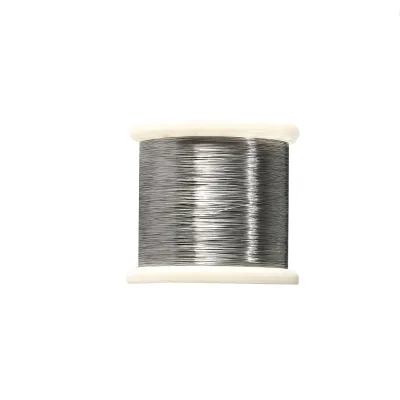


Comprehensive Sourcing Guide
Sourcing Guide for High-Temperature Incoloy 800H Wire Procurement
Procuring high-temperature Incoloy 800H wire requires a rigorous approach that balances metallurgical precision with supply chain reliability. As a nickel-base corrosion-resistant alloy, Incoloy 800H is specifically engineered for applications demanding exceptional resistance to oxidation and carburization at elevated temperatures. Buyers entering this market must navigate a landscape defined by specific material grades, strict standard compliance, and variable manufacturing processes. This guide outlines the critical factors for sourcing this specialized wire, ensuring that procurement decisions are grounded in verified product attributes and industry realities rather than speculative claims.
Technical Specifications and Material Composition
The foundation of a successful procurement strategy lies in a precise understanding of the technical specifications associated with Incoloy 800H wire. The material is fundamentally a nickel-iron-chromium alloy, often categorized under the broader umbrella of nickel-base alloys. When evaluating potential suppliers, buyers must verify that the product explicitly matches the required grade, such as Incoloy 800, 800H, 800HT, 825, or 925, as these designations carry distinct metallurgical implications. The observed market data indicates that the product is available in various forms, including bright, acid white, or oxidized surfaces, which directly impacts downstream processing and final application performance.
Dimensional accuracy is a primary concern for wire procurement. The available specifications suggest a diameter range extending from 0.02mm to 10mm, with customization options available for specific project needs. The wire is typically produced through cold drawing processes, which enhance tensile strength and dimensional consistency. Buyers should expect mechanical properties that align with high-performance requirements, including tensile strength ranges between 1170 MPa and 1520 MPa, and yield strengths ranging from 1035 MPa to 1450 MPa. Elongation values are typically observed between 2% and 5%, indicating the material's ductility under stress. The density of the alloy is approximately 8.47 g/cm³, a critical factor for weight-sensitive applications in aviation or industrial machinery. Furthermore, the melting range for these alloys is generally cited between 1354°C and 1413°C, defining the upper thermal limits for processing and service.
Compliance and Certification Verification
In the high-temperature alloy sector, certification is not merely a formality but a prerequisite for operational safety and regulatory compliance. The supply chain for Incoloy 800H wire is heavily influenced by adherence to international standards. Buyers must verify that the supplier can provide documentation confirming compliance with major standards bodies, including AISI, ASTM, BS, DIN, GB, and JIS. The specific standard "ASTM Aws" is also noted in the context of criteria for these materials, suggesting that welding and fabrication standards are equally important.
Quality assurance is further validated through third-party inspection services. Reputable suppliers often facilitate inspections by agencies such as SGS or BV, or provide certificates based on buyer-specific requirements. ISO 9001 certification is a common benchmark for the manufacturing process, ensuring that quality management systems are in place. While some background information may reference CE certification, buyers should treat this as a variable attribute that requires direct confirmation from the specific vendor, as it is not a universal constant across all listed products. The presence of an ISO certificate is a high-confidence indicator of a supplier's commitment to standardized quality control, but it should be cross-referenced with the specific material test reports (MTRs) provided for each batch.
Cost Drivers and Pricing Dynamics
Understanding the cost structure of Incoloy 800H wire is essential for budgeting and negotiation. The observed price range in the market spans from $10 to $900 USD, a wide variance that reflects differences in diameter, length, surface finish, and order volume. The Minimum Order Quantity (MOQ) is another significant cost driver, with observed ranges from 1 unit to 100 units. Buyers purchasing small quantities may face higher per-unit costs, while bulk orders typically benefit from economies of scale.
The manufacturing process plays a pivotal role in pricing. The wire is produced via cold drawing, a labor-intensive process that requires precise control to maintain mechanical properties. Additional costs are incurred for surface treatments such as polishing, bright finishing, or acid white treatments. The condition of the wire, whether soft annealed or hard, also influences the price, as heat treatment processes add to the production time and energy costs. Packaging is another variable; options include wooden boxes, cartons, or coils, with wooden cases often being the standard for high-value or heavy shipments. Buyers should request detailed quotes that break down these variables to understand the true cost drivers rather than relying on a single unit price.
Typical Applications and Usage Scenarios
Incoloy 800H wire is engineered for demanding environments, making its application scope a critical selection criterion. The primary usage is in high-temperature applications, where the alloy's resistance to oxidation and scaling is paramount. This makes it suitable for industries such as chemical processing, medical equipment manufacturing, and industrial heating elements. The material's corrosion resistance also extends its utility to electronics and aviation sectors, where reliability under thermal stress is non-negotiable.
The versatility of the wire allows for diverse fabrication methods. It can be utilized in components requiring hot rolling or cold rolling, depending on the final geometry and strength requirements. The "Bright" surface finish is often preferred for applications where aesthetic appeal or reduced friction is necessary, while "Oxidation" or "Acid White" finishes may be selected for specific chemical resistance profiles. Buyers must align the wire's mechanical properties, such as its tensile strength and elongation, with the operational loads of their specific application. For instance, applications requiring high structural integrity at elevated temperatures will prioritize the higher end of the tensile strength spectrum, while applications requiring flexibility may focus on the elongation characteristics.
Supplier Evaluation and Lead Time Management
Selecting a reliable supplier is as important as selecting the correct material. The origin of the product is a key factor, with China, specifically Shanghai, identified as a primary production hub for these alloys. Buyers should evaluate suppliers based on their ability to meet delivery timelines, which typically range from 5 to 20 days depending on order complexity and stock availability. The "Delivery Time" attribute varies between 5-15 days and 15-20 days, indicating that lead times are not static and depend on the specific order configuration.
When evaluating a supplier, buyers should look for evidence of customization capabilities. The product attributes confirm that customization is available, including model numbers, diameters, and packing requirements. A supplier's ability to offer OEM services and provide free samples is a strong indicator of confidence in their product quality. Buyers should also verify the inspection protocols, ensuring that the supplier accepts third-party inspections by agencies like SGS or BV. The availability of samples allows for physical verification of the wire's surface finish, dimensions, and mechanical properties before committing to a large order. It is crucial to confirm that the supplier can consistently meet the specified standards and that their production capacity aligns with the buyer's volume requirements.
Quality Control and Inspection Protocols
Quality control in the production of Incoloy 800H wire involves a multi-layered approach to ensure consistency and reliability. The inspection process should include verification of the material's chemical composition, mechanical properties, and dimensional accuracy. Buyers should demand that the supplier provides test results that confirm the alloy meets the specified standards, such as ASTM or DIN. The "Inspection" attribute notes that SGS, BV, or buyer-required inspections are standard, providing a framework for independent verification.
The surface condition of the wire is another critical quality metric. Whether the wire is bright, acid white, or oxidized, the finish must be uniform and free from defects that could compromise performance. The "Surface Treatment" attribute mentions polishing, which is a key step in achieving a high-quality finish. Buyers should also verify the condition of the wire, ensuring it matches the specified state, whether soft annealed or hard. The packaging, typically in wooden cases or coils, must protect the wire from damage during transit. A robust quality control protocol ensures that the wire delivered meets the rigorous demands of high-temperature applications, minimizing the risk of failure in service.
Long-Term Procurement Considerations
Sourcing Incoloy 800H wire is a long-term commitment that requires strategic planning beyond the initial transaction. Buyers should consider the scalability of their supply chain, ensuring that the supplier can handle increased volumes as project needs grow. The availability of customization and the flexibility of the MOQ are critical for adapting to changing market demands. Additionally, the stability of the supply chain is paramount; buyers should assess the supplier's ability to maintain consistent quality over time and their capacity to manage lead times effectively.
Sustainability and compliance with evolving environmental regulations are also becoming increasingly important. While specific environmental certifications may not be explicitly listed in the product attributes, buyers should inquire about the supplier's environmental management practices. The long-term value of Incoloy 800H wire lies in its durability and performance, which reduces the need for frequent replacements and maintenance. By establishing a strong relationship with a reliable supplier, buyers can ensure a steady supply of high-quality wire, mitigating the risks associated with supply chain disruptions and ensuring the continued success of their high-temperature applications.
FAQs
What is the melting range of high temperature incoloy 800h wire?
The melting range for this alloy is typically between 1354°C and 1413°C. This thermal limit defines the upper processing boundaries and service conditions for high-temperature applications in industrial settings.
Which standards does the high temperature incoloy 800h wire comply with?
The wire complies with major international standards including AISI, ASTM, BS, DIN, GB, and JIS. Buyers should verify specific ASTM or AWS criteria for welding and fabrication requirements in their projects.
Can I get free samples of high temperature incoloy 800h wire?
Free samples are available for evaluation before placing a bulk order. This allows buyers to verify surface finishes, dimensions, and mechanical properties like tensile strength prior to committing to a purchase.
What is the typical delivery time for high temperature incoloy 800h wire?
Delivery times generally range from 5 to 20 days depending on order complexity. Specific lead times vary between 5-15 days and 15-20 days based on stock availability and customization needs.
What certifications are provided for high temperature incoloy 800h wire?
Suppliers typically provide ISO 9001 certification and third-party inspection reports from SGS or BV. These documents confirm quality management systems and material compliance with specified standards for critical applications.
How is the high temperature incoloy 800h wire packaged for shipping?
The wire is commonly packed in wooden boxes, cartons, or coils depending on the order. Wooden cases are standard for high-value shipments to ensure protection during transit and storage.
What is the minimum order quantity for high temperature incoloy 800h wire?
The minimum order quantity ranges from 1 to 100 units depending on the supplier. Smaller orders may incur higher per-unit costs, while bulk purchases often benefit from volume pricing structures.